| |

|
 |
|
Matches 3,401 to 3,450 of 3,867
| # |
Notes |
Linked to |
| 3401 |
Plot:06 2062 03
GRid=25585334 | Godfrey, Patricia Ann "Patty" (I3001)
|
| 3402 |
Plot:Bldg F, Sec I, Tier D, Shrine of the Good Shepherd
GRid=198337763 | Cavil, Roland Martin (I1326)
|
| 3403 |
Plot:OLD MAUS 14
GRid=105668066 | Graff, Edward Adam (I4117)
|
| 3404 |
Plot:PH1-EA-4-11
GRid=36915198 | Muilenberg, Adriana (I2814)
|
| 3405 |
Plot:PH1-EA-62-19
GRid=49817964 | Defoe, Donald Merle (I2768)
|
| 3406 |
Plot:S ection: B (St Joseph), Lot: 100, Grave: 2
GRid=174089240 | Koziatek, Theresa V. (I2095)
|
| 3407 |
Plot:Section 32, Lot 111
GRid=154371676 | Dozer, Allen Jenkins (I3173)
|
| 3408 |
Plot:Section B, Block 23, Lot 1
GRid=115426729 | Bedwell, Mary Theresa (I4753)
|
| 3409 |
Plot:Section E, block 24, grave 385
GRid=10169451 | McHenry, John Robert (I4861)
|
| 3410 |
Plot:Section: 25 Plot: 760 Space: 6
GRid=205320635 | Hellenberg, Clara Christine (I5032)
|
| 3411 |
Plot; Temple of Memories Mausoleum, 1st floor, crematorium area, Section 1301
GRid=10734497 | Campo, Gaspare Anthony (I2937)
|
| 3412 |
PlotL Old 1-1042-2
GRid=99754741 | Braasch, Elizabeth Blanch (I4750)
|
| 3413 |
Police Officer George Motquin became the first police officer killed in the line of duty when struck by an automobile while walking icy streets..
Patrolman Motquin was walking home from his beat when he was struck by a vehicle driven by a drunk driver. He was pinned against another car which skidded on the icy roads..
Patrolman Motquin had been on the police force for 5 years. He was 36 years old.. | Motquin, Patrolman George Anton (I4797)
|
| 3414 |
Police officer in the Green Bay Wisconsin police department. | Stievo, Officer Danny Lee (I5365)
|
| 3415 |
Pre 1921: 772 Michigan Ave, Detroit, MI
Changed in 1921 to: 2556 Michigan Ave, Detroit, MI 48216 | Pfeiffer, Frank (I39)
|
| 3416 |
Presbyterian Chalmer´s Church | Family: John Ellis Cavil / Jenette Craig (F118)
|
| 3417 |
Priest Performing Marriage: Rev Pieter Carabin
Find-A-Grave Link to Rev Fr Peter Carabin
https://www.findagrave.com/cgi-bin/fg.cgi/page/gr/:%20http://www.findagrave.com/cgi-bin/fg.cgi?page=gr&GRid=167164953
Father Carabin officiated at his cousin Joseph Peter Hoeffel's first marriage in Nowwalk, Ohio on November 3, 1848.
From the Book "Missionary labors of Fathers Marquette, Menard and Allouez, in the Lake Superior Region":
Reverend Peter Carabin, a German, was stationed in Green Bay from 1843 to 1847.
Father Peter Carabin came back to serve as Pastor of his home parish in 1847 after he had served for a number of years in Wisconsin. He was in ill health and had retired to his parents home to recuperate. Bishop Amedius Rappe of the Cleveland Diocese welcomed the recuperating Indian missionary as pastor because of the great need for priests.
The exact nature of Fr. Carabin's illness is not known but it was known as ?Maumee Fever? during the canal days. At the time of his dearth Fr. Carabin was paralyzed with the exception of his hands. In his final years he made a new English translation of the Book of Job and a poetic version in German of the Psalms. This book is now in the hands of a descendant, Miss Mary Carabin, Norwalk.
It was during the time when he was serving at St. Alphonsus that he solicited subscriptions for a new church.
The four acres of land that the present church was built on was bought from John Spitznogle on May 23, 1849. The stone for the church was native Bedford.
Sandstone taken from a quarry which was located along the river on the Peter Bauer farm adjacent to the land of Joseph Carabin. This is on the east side of Sate Route 61 across from Settlement Road. The new church was constructed on the north side of Settlement Road where it still stands today. According to parish financial records $4726 was collected from parishioners during the stay of Fr. Carabin.
The following priest have served this parish throughout the years: Father Peter Carabin, Pastor 1847 -1850.
The Story of Peter Carabin
Proto-Priest of Northwestern Ohio
By JOSEPH LUDWIG
Because I am a Catholic priest it must seem strange that it was only last year, 1949, that I became acquainted with Father Carabin. What is even more strange is the fact that my introduction to him was brought about by a non-Catholic University professor.
With great interest I was reading the fine little volume on local Toledo history, Caltal Day!, when, almost without warning I came upon the following statement, "'Riefe is a record of a Father P. Carabin being authorized by the Court of Common Pleas in 1837 to solemnize marriages in the county."l I probably had seen or heard the name before but it had not registered. And since only a few weeks later I was to go to Notre Dame University, Indiana, to do research work in their archives, I kept this name Carabin in my mind, intending to find out what I could about this early Ohio priest. Luck favored me. Not more than a few days after mr arrival at Notre Dame I was able to inform Dr. Downes that I had "discovered" our unknown friend, and that hewould be good material for an interesting story.
It is not the usual thing to begin the story of a man's life with an account of his death; but in this case I have a good reason for doing the unusual, because the day on which I am writing this, August 1, is the day on which Father Carabin died, in IS73, in St. Vincent's Asylum, Cleveland, where for the last twenty years of his life he had been a patient sufferer as a consequence of various maladies contacted in his missionary labors in Ohio, Michigan and Wisconsin. 2
The historical beginning of the Carabin Odyssey lakes us to the Firelands, to Huron county, to the city of Norwalk and the village of Vredenborgh, now known as Peru, and the year was 1825. Norwalk itself was then only a small village, numbering at most a few hundred inhabitants; but in 1818 it had been made the seat of Huron county, established in 1809, and orgarnized in 1815. 3 The first church in Norwalk had been built by the Methodists, in 1820, and one year later the Episcopalians had followed their example. 4 The first Catholic to settle in Norwalk was John P. McArdle, from Wellsburg, West Virginia, who brought his family to Norwalk in 1826. He was a printer by trade, and within a year after he had come to Norwalk, the first newspaper published in Huron County, the Norwalk Reporter, made its appearance.~ The first visit by a Catholic priest to Norwalk was by the Rev. Stephen Badin, in 1828.
On this occasion he stopped at the McArdle home and baptized two of his children.6 This Father Badin has the undue distinction of beng the first Catholic priest ordained in this country, in 1793, by the first Catholic bishop of the United States, John Carroll,7 a cousin of Charles Carroll of Carrollton, the last surviving signer of the Declaration of Independence. In the summer of 1828, after an absence of nine years in his native France S for the benefit of the Catholic missions in Ohio, Father Badin was now on his way from New York, over Cincinnati to Detroit, visiting on his way various placcs, like Norwalk, and ending up as pastor of the Pottawatomi Indians near South Bend, Indiana, "a circumstance that in the designs of providence helped to prepare the way for one of our greatest Catholic educational institutions, Notre Dame University," 9 in the famous log chapel on the campus of which he has found his last resting place.
Father Badin had hardly shaken the Norwalk dust from his shoes, when "one September evening, in 1828, just as the sun was setting, there came into Norwalk, along the East Main street road, two lucer looking wagons, each drawn by a yoke of oxen." l0 That was no unusual sight in frontier towns in the days of the covered wagon. These two wagons stopped over night at Norwalk, continuing their journey next morning towards Cincinnati for which city they were headed. One of the wagons was occupied by Peter Bauer and his wife and six children 3S well as by the family of Anton Phillips with two children. The other wagon was inhabited by Joseph Carabin and his wife and eight children, together with Clement Baumgartner and wife who had no childrcn. 11 Counting the heads, that made exactly one dozen travelers for each wagon.
Without knowing it, they had all but reached the end of the trail. And the trail had been a long one. They had left their home in Lorraine 12 many weeks before, had safely landed in New York from whence they had traveled by boat down the Erie canal to Buffalo, taken another boat which had brought them to Huron. They were on their way to Cincinnati. Or so they thought.
When they had proceeded about four or five miles southward something unexpected happened which at the time must have looked to them like a major catastrophe: the Carabin wagon broke down completely and upon inspedion proved to be beyond repair. Being thus forced to interrupt their journey, they began to look about them to see where they were and what they could do. The country looked good to them, even though it was all forcst, and since they had to buy land somewhere, no matter where they might finally settle, they decided that this site was as good as any and that they might as well buy here where Providence had indicated they should settle. That is what they did, and that is how the parish at what is now Peru came into being. Before the year was out other settlers, friends of theirs, followed after them, and year by year more and more came, all of them Catholic families of German stock, from Lorraine, Alsace and neighboring districts, So many, that within a few years their number had passed the hundred mark.
In a previous paragraph I have given the number of people traveling in the two queer looking wagons as twenty-four. As a matter of fact, the number was twenty-five. In addition to the parents and children of these four families there had come along also a sister 14 of Peter Bauer's, and she was destined to play a leading role in the new settlement. Her name was Francisca Bauer, and she had been a member of a religious community of women, the Sisters of Providence, back in her native Lorraine. Her Community, like scores of others, had seen hard days in the wake of the French Revolution and the Napoleonic wars, with their convents closed and confiscated and their members dispersed. And just at this particular time, in 1828, the rumblings of another political revolution could be distinctly heard in the not too distant future, making the life of a rehgious community of nuns all but impossible. She decided, therefore, to follow her brother's family across the ocean to a land where she could live in peace and tranquility, and where she hoped to be of real help and assistance to them, especially regarding their religious life as Catholic people. She is known as "Sister Francisca," also as "Waldschester" or "hermite 15," for she lived all by herself in a cabin built by her own hands on her own land. She was a teacher by profession, and that is why right next to her own cabin she also built a little school in which she herself taught the children of the settlement their three R's as well as their catechism and prayers. And this, no doubt, is the first and earliest Catholic school in all of Northwestern Ohio.
In his Journal Father Brunner speaks highly of this Hermitess; he knew her intimately since for a number of years he was her pastor. He tells us that she was "the very life" of this small colony of immigrants; not only was she the teacher of their children, but to all of them she was a helper in every need, a comforter in trouble and discouragement, physician and nurse in sickness, and even a sort of "substitute-priest" in the first years when visits by real priests were of necessity few and far between.
According to the available evidence, the very first priest to visit them was none other than Bishop Edward Fenwick, of Cincinnati, 1 in whose diocese they had settled. Bishop Fenwick came of an old English family of Maryland; while studying abroad, in Belgium, he had joined the Order of Preachers, commonly and better known as the Dominicans, and on his return to his native country had used his patrimony to establish his Order in the United States, in Washington County, Kentucky. There also he had opened, in May 1807, 16 St. Thomas Aquinas College, the first Catholic college west of the Allegheny mountains, for which he procured the best professors from among his fellow Dominicans abroad. On January 13, 1822, he had been consecrated first bishop of Cincinnati, his jurisdiction extending not only over all of Ohio, but including also Michigan and even Wisconsin. 17 He is known as "The Apostle of Ohio," for even as bishop he sought and found his greatest satisfaction in doing real missionary work throughout his vast diocese. To ride thirty or forty miles out of his way to locate and minister to some lonely, stray Catholic settler's family of whose existence he had been informed, was routine work with him. 19 His greatest delight he found in his visits to the various Catholic Indian tribes scattered all over his diocese. The only word which will adequately express the reverential love these Indians had for their "Great Father," as they affectionately called him, is to say that they idolized him. 20
It was on one of his periodical pastoral visitations through Ohio that Bishop Fenwick first visited Norwalk and Peru, in 1829. On this occasion he went out of his way, as remarked above, to locate these new settlers of whom he had heard. He knew the name of Carabin, for he had been informed that a son of the Carabin family, by the name of Peter,
[Page 188 missing]
(Address): The R. Rev. Dr. Fenwick Bishop
of and at Cincinnati (Ohio)
United States of America - over Havre
Stamped:
8 New York
Juillet Aug/ 19, 1829
Monsigneur,
I am sending you herewith the dimissorial letters which you have requested of our most Reverend Bishop for Mr. Carabin, a native of thisdiocese. This young subdeacon has spent several years in our Seminary where his morals have at all times been regular, his conduct good, his talents and capacityqujte average; he is not over-eager for work and isa cold and slow character. I consider him a good youth, but he needs stimulation for study and for his proper training in the ecclesiastical spirit and piety. For the rest, there is no difficully in learning to know him and I have no doubt that in lessthan eight days the Superior of your Seminary will have formed a correct judgment of him. Although he is not in any respect brilliant, it nevertheless seems to me that you can make good use of him and he can even render you service in more ways than one.- Monseigneur of Nancy has been very pleased to receive your regards and he asks me to send you his own.
Be pleased also, Monseigneur, to accept the expression of my own lively and sincere sentiments as well as of themost profound respect with which I have the honor to beyour most humble, most obedient and most devoted servant,
Ferry, Sup. of the Seminary of Nancy
who recommends to your goodness Peter Carabin, who thought it his duty to accompany his family which has emigrated and settled in America.
P.S. Mr. Carabin, whom I salute and embrace with affection, still owes me 13 fr. for books. Since in view of the distance separating us it will be impossible for him to send them to me, I donate them to your Seminary. Be so kind as to forward to him the few words I have written for him. Excuse my taking this liberty.
There is little need to enlarge on this description of Carabin given us by his Seminary Rector. His portrait is painted in full size and every detail is marked. The first impression one gets is that of a young man of a decidedly phlegmatic temperament, "sluggish, not easily aroused or moved, apathetic, calm, composed," 24 and cold. He is not over-ambitious, trying to get by with as little work and exertion as possible. Even for prayer he needs a "push,"- a strange symptom, indeed, in a young man aspiring to the priesthood! But over against and counter-balancing this darker side of his character there is the brightness of a sunshiny, open, frank and honest face; clear, trusting and "speaking" eyes - in no time at all, "in less than eight days," even a strange ArnericanSuperior will be able to put the right tag on him- read him like an open book!
This correspondence between Nancy and Cincinnali must be of special interest to non-Catholic readers of this QUARTERLY; for it is just one small illustration of the great care the Catholic Church exercises in the selection and admission of candidates for the priesthood. According to Canon Law, no bishop is allowed to ordain any candidate who is not a native of his diocese; he may do so only with permission in writing of the candidate's own "Ordinary," i.e. native bishop, And besides, he must use all means of information to make sure that the candidate has all the qualifications required by law in a priest. The letter, printed above, of the Rector of the Seminary of Nancy put Bishop Fenwick in possession of this necessary information regarding young Carabin's qualifications. The official document of the Bishop of Nancy, signed by him and sealed with the official seal of his diocese, by which he relinquished all rights to the services of Carabin for his diocese and transferring them to the bishop of Cincinnati, is no longer extant, or at least I have discovered no trace of it. But we may be sure that it was issued - the Rector of the Seminary refers to it in his own letter - because without it Bishop Fenwick could not have proceeded to the ordination of Carabin to deaconship first, and then to the priesthood.
The exact date of Carabin's ordination to the priesthood is doubtful. Father Lamott, the official historian of the Archdiocese of Cincinnati, gives 1830 as the year, without any further date, 25 whilst Houck, the Cleveland historian, gives the year 1831. 26 The Obituary notice in the Catholic Directory also states that Carabin was "ordained in 1831." 27 On the other hand, O'Daniel, the biographer of Bishop Fenwick, favors the year 1830,28 suggesting as the probable date, September 5, on which day Fenwick certainly held ordnations, ordaining among others Father Samuel Mazzuchelli, the great apostle of Upper Michigan. It is difficult to sec how Houck, the Cleveland historian, came to give 1831 as the year. Investigation in Cincinnati where Carabin had been ordained would have given him the correct information, because it was in 1830, not 1831, that Carabin's ordination had taken place. For this categorical assertion we have Carabin's own testimony. In the Monroe parish records there is an entry, by Carabin himself, stating that he said Mass there "for the first time on the second Sunday of Advent, 1830." 29 This would just about make it a certainty that he was ordained on September 5, 1830, together with Mazzuchelli, as O'Daniei surmises, because it is most unlikely that Fenwick would hold ordinations in September and again a month or two later. If Carabin was not ready for ordination in September, he would hardly be more ready in October or November. Besides, in 1828, when Carabin arrived in this country, he already was in subdeacon's orders, and by September, 1830, he had two full years of additional study and preparation, which was more than enough, since the usual interval between these two ordinations is only one year, even today. Earlier than 1830 Carabin could not be ordained because he was too young, he lacked the "canonical age"; to ordain him, even in 1830, when he was twenty-three years old, Fenwick needed a special faculty of dispensation, which, of course, he had.
Peter Carabin thus has the unique distinction of being the first young man, not indeed native, but resident, of Northwestern Ohio, ordained a Catholic priest, within Ohio, and by the first Catholic Bishop of Ohio. And that, of course, is the reason why we have gone into all the details and particulars about it, and also, why we are writing this article about him.
His first assignment, as stated above, was to Monroe, Michigan. Before Detroit was erected into a diocese, in 1833, so all of Michigan was part of the diocese of Cincinnati. And we know that at this particular time, in the early 1830's, Michigan laid claim to the territory on which the city of Toledo now stands. In April, 1835, the last election in Port Lawrence Township was held under di rection and authority of Michigan. 31 Thus it comes that Father Carabin must be considered the first and earliest Ohio priest, officially appointed, working in the Toledo area of whom we have certain knowledge. Any others who are usually mentioned, such as Father Quinn (of Tiffin), or Father Thienpont (of Dayton) came later, even if not much later. And here is the place to correct a statement by W. M. Heflinger 32 to the effect that in 1812 a second white settlement, north of the Greenville line at Fremont, "consisted of a French Catholic mission with two priests." Curiously enough, although Mr. Heflinger gives his authorities and source references for ever so many other statements in his interesting articles, he fails to say who or what his authority for this statement is. And no wonder, because there is no authority for it. Any French priest stationed at Fremont in 1812 and before that time would have been sent there either from Quebec or Montreal (Baltimore and Bardstown are altogether out of the question). But in neither place is there even a shred of evidence, either in ecclesiastical or governmental archives, to show the existence in Fremont of such a mission or the presence of a Catholic priest at any time. It is a local tradition, I know, ( placing a priest in Fremont in 1780). and Mr. Heflinger, being a native of Fremont, can of course be forgiven for wanting to uphold that tradition. But unsupported traditions, nomatter how often repeated, are not evidence. What is said here of a Catholic mission and priests at Fremont holds good, and even more so, in the case of such a mission at Defiance, in 1670! The placing of a granite marker on the "site" does not constitute evidence. So, let me emphasize it, there was no Catholic priest anywhere in Northwestern Ohio from the time Father Edmund Burke left with the English garrison of Fort Miami in the summer of 1796 33until Bishop Fenwick sent his first priests to Monroe and later to Tiffin. 34
Father Carabin was stationed at Monroe, "St. Antoine," with its missions for about twelve or thirteen years, till 1843. As long as the territory over which Ohio and Michigan were fighting actually was, or could be considered, Michigan territory, he could perform marriages in Toledo under Michigan license. But when the dispute had finally been settled in favor of Ohio, he needed a license, issued under Ohio law, for the County of Lucas. And that's how it comes that in 1837 we find him taking out such a license to authorize him to assist legally at marriages of Catholics here in Toledo. The County Clerk at the local Courthouse showed me all the old marriage registers preserved here, but in none of them was there an entry going back to 1837. The County Clerk of Monroe County, Michigan, on the other hand was able to send me a list of eleven marriages performed by Father Cambin, in 1837, several of which show distinctly Toledo names, such as Knaggs and Navarre. 35In a subsequent letter he informed me that the very first time Carabin officiated at a marriage ceremony was on January 24, 1831. 36
When, in 1843, the state of Wisconsin, which before that time had been put of the diocese of Cincinnati, and later of Detroit, was formed into a separate diocese, 37 with Milwaukee as the bishop's seat, and Martin Henni as its first bishop, Father Carabin served his connection with Cincinnati and Detroit and followed Henni to Wisconsin. And there was a good reason for this; or rather two good reasons, one professional, the other personal. As a priest and missionary, Carabin most likely was attracted by the newness of work in a new diocese; even the hardships to be expected in "virgin territory" would only serve as a spur to his zeal and love of adventure. In 1843, he was in his best years, in the middle thirties, thirty-six, to be exact. He could speak four languages: German, which was his mother-tongue; French, the language of his native country; English; and also some Indian dialects which later he had "picked up" in the course of his missionary work in Michigan- four languages, all of which were needed for successful missionary work in Wisconsin.
And then there was a personal attachment, not to say friendship, between Carabin and Bishop Henni. When the Carabins first came to Peru, Father Henni was pastor of Canton and the priest nearest to their settlement. It was Father Henni who at the reguest of Bishop Fenwick came to Peru to bless the ground or site of the church they were going to build. And when the simple log church was ready for use, he came a second time to dedicate it solemnly to the service of God, placing it under the patronage of St. Michael, the Archangel. 38 To Peter Carabin, young and impressionable subdeacon at the time, Father Henni, himself still a young man and only two years older than Carabin, 39 undoubtedly appeared as the ideal priest and missionary to whom he looked up with admiration and reverence and love. Little wonder, therefore, that when Henni was sent to Wisconsin as bishop, Carabin attached himself to him.
I have no evidence whatever for the following, but it is a historian's "hunch," one which I consider a "natural" and which is within the possibilities and even probabilities. Young Carabin, we must remember, was a subdeacon and as such a candidate for the priesthood. That being so, he would strongly desire and go out of his way to make contacts with the priest, whoever he is, living nearest to their settlement. In this case, as we have seen, the priest happened to be Father Henni, at Canton. The first opportunity he had, Carabin would travel to Canton, even walking the distance, if necessary. If for no other reason, he certainly would want to go to confession and in other ways obtain a priests guidance and Counsel and help. And thus a clerical friendship sprang up between the two, the young missionary on the field and the candidate for the missionary life. And it is not only possible, but almost certain that the first news Bishop Fenwick obtained about the Peru immigrants and the young seminarian for his diocese came to him from Father Henni.
That would also explain the correspondence between Cincinnati and Nancy, especially the phrase used by Father Ferry, the Nancy Superior, in his letter to Bishop Fenwick, wherein he speaks of the dimissorial letters "which you have requested" from the Bishop of Nancy. Fenwick must have had definite and positive knowledge about Peter Carabin, his name, place of birth, home diocese, his character as subdeacon, and his intention of joining Fenwick's diocese, or he could never have made that kind of a "request." And the most natural explanation is that either Carabin himself had written to Fenwick directly, or, what is more likely, Henni had written, in the name of the young student who, after all, was a total stranger to Fenwick, and who would want a proper introduction to his future bishop through one of his priests.
Only three short years in the missions of Wisconsin, and the young priest had reached the end of his usefulness! During these years he was stationed at Green Bay as pastor of St. John's Church, 40 paying regular visits to a German settlement at Pipe Village. also to the Bay Settlement, to Rapide des Peres, and to Calumet. Owmg to the still primitive and unhealthy conditions of the new country, he contracted what in the Canal Days here in Toledo was called "Maumee Fever"; whatever the nature of the malady was, 41 it not only incapacitated him for the time being, but for the rest of his life. In the hope of regaining his health and strength he returned to his family in Peru, in the Fall of 1847. 42 From a letter of Bishop Rappe of Cleveland, 43 we know that Carabin had applied to him for "some charge, pro tempore." 44 And only a few months later Rappe informs Bishop Purcell that he has "permitted Father Carabin to take charge of the new church, (St. Peter's), at Norwalk." 45 This was a most thoughtful and considerate gesture on the part of Bishop Rappe, for it made it possible for Carabin to live under the care of his family and at the same time to make himself useful as a pastor. Before very long, however, hissickness must have gotten the best of him, because he is not listed in the official "Dirertory" of 1850, which means that in 1849 he was without any assignment. Then, in 1851 and 1852, we find him listed again as pastor at lower Sandusky, (Fremont), and, in 1853, as "assistant pastor" at St. Peter's Church, Canton. And after that the official Directory is silent about him until, in 1874, his death is reported, as mentioned in the beginning of this article.
What his real sickness was we do not know, The death notice speaks of "paralysis, induced by cold and exposure on the missions." 46
Which inclines me to think that, perhaps, it was a rheumatic condition, or a severe case of arthritis. In a letter to Orestes Brownson, 47
Carabin states that "for the past six years I have been incapable of any motion except that of my hands." Poor man! But at least he had the comfort of reading. And this letter to Brownson indicates the kind of reading he enjoyed: the best that could be had! For Brownson, who by the way was a convert to the Catholic Church, was the literary marvel of his generation, "America's greatest Catholic philosopher of the nineteenth century," 48 possessed of a gigantic mind as well as of a colossal body, of an inexhaustible energy and all-around versatility which enabled him, for more than twenty years, to do, himself. almost all the writing to fill the pages of the QUARTERLY REVIEW published by him. I am glad and happy to know that Carabin, in the days and years of his crippiing sickness, had a Brownson to fall back on to occupy his mind and to help him forget the pain which, no doubt, wracked not only his body, but his mind as well, In the letter mentioned above, Carabin informs Brownson that he has made a new English translation of the Book ofJob, and he expresses his satisfaction and gladnessover the fact that he has found "something like an occupation to turn away my attention from my situation or to render it a little less intolerable." It is indeed easy to understand why, of all the books of the Bible, Carabin would, first of all, turn to the Book of Job. Therein he discovered the arch-and-proto-type of his own "situation." Job, as portrayed in that book, is the personification of misery in its most severe intensity and largest extent. Reading and studying and meditating that book, Carabin would find his own misery "a little less intolerable," and on many an occasion there would spring from the lips of Job to the lips of Carabin the sublimely comforting and soul-strengthening prayer of resignation, "the Lord gave, and the Lord hath taken away: as it hath pleased the Lord so is it done: blessed be the name of the Lord." 49
Carabin also turned to the Book of Psalms of which he made a poetic translation in German. I have no knowledge of the whereabouts of his translation of the Book of Job-it probably is lost; but, as I am writing this I have his translation of the Psalms lying right at my elbow. 50 It is an old·fashioned notebook of 250 pages, numbered, well bound in cardboards, with back and corners in leather, and well preserved. When I opened it, I was almost struck breathless by what I beheld: the writing, all of it, is a most beautiful old·Gothic print! Of the 150 Psalms only 118 are translated in this collection; the pages are all used up by these, and also, Carabin probably had finally to discontinue his work as his condition grew worse with the years. The language of Carabin's Psalms fits and equals the writing; it is beautiful--he was a poet, no doubt about it. If the editor can spare the space, I should like, for the benefit of those readers who know German, to add at the end of this article just one sample, to prove Carabin·s poetic ability. And I choose Psalm No, six, because it is fairly short, but more especially because it is a prayer which describes Carabin's condition most cloquently, and which must have often given him courage and grace to bear his pitiful lot patiently.
As we reach the end of our story we cannot help becoming aware of, and marvelling at, the transformation that time, yes, but especially sickness had wrought in Carabin. We remember the young seminarian who needed "stimulation to study," and in the end we meet the paralyzed priest who is looking about him to find "something like an occupation," and who finds it in translating books of the Bible, and in studying Brownson's Review! Brownson, who proved to be better than a physician to Carabin, lies buried in the crypt of the Sacred Heart church at Notre Dame University, while Father Carabin found his last resting place in St. John's cemetery, Cleveland. 51
This is the story. It only remains for me to tell Dr. Downes how greatly indebted I am to him for having steered me upon this "find."
For without that casual statement in his Canal Days I might have missed this interesting man, who, in the strict sense of the word. is the ProtoPriest of the diocese of Toledo and of NorthwesternOhio, Peter Carabin. 52
? ? ?
PSALM SIX
1 Herr, mein Gatt, in deinem Grimme
Strafe meine Suenden nicht,
Mit des Zornes Schreckenstimme
Rufe mich nicht ins Gericht.
Habe gnaediges Erbarmen
Mit mie schwachen, mit mir armen,
Dutch und durch bin jch verwundt,
Mach, 0 mache mich gesund.
2 Meine Seete ringt mit Schmerzen,
Ach, O Herr, wie lange noch?
Nahe dich dem kranken Herzen,
Rette meine Seele doeh.
Heile sie von ih ren Suenden,
Lass, 0 lass mich Gnade finden;
Bei dec Liebe l:.it ich dich,
Retf, OAllerbarmer, mich.
3 Willst du in das Grab mich senken?
Guter Gott, verschone mein.
Wer wird tot noch dein gedenken,
Wet im Grabe dcin sich freun?
Hoere meiner Seufzer Stoehnen,
Sieh die Stroeme meiner Traenen;
Ach wie manche truehe Nacht
Habe schluchzend ich durchwacbt!
4 Meine Glieder sind gdaehmet,
Trueb des Auges Heiterkeit;
Alt schon hab ich mich gegraemet
Ob dec Draenger Feindlichkeit.
Weg von mir, mr Uebeltaeter,
Seht, me;n Gott ist mdn Erretter.
Ja, der Herr hat mich erhoert
Ewig auch sei er geehrt.
5 Meine Klag hat er vernommen,
Und gesehn auf meinen Sclunerz,
Mein Gebet, vor ihn gekommen,
Hat geruehrt sein Vaterherz.
Scham bedecke nun mit Roete
Meine Feinde; ihe Gespoette
Hat ein Ende, and sie ziehn
Sich beschaemt zurueck, and fliehn.
SOURCES
The sources from which the materials for this article are drawn are rather meagre and few in number, but they are authoritative and first-class. In the order of their relative importance I list them as follows:
A number of autograph signed letters in the University of Notre Dame archives, of which I .possess photostat copies;
Manuscript copy of the Journal of the Rev. Salesius Brunner, founder of the Congregation of the Precious Blood in America, in the archives of St. Charles Seminary, Carthagena, Ohio;
Outline History of St. Peter and St. Paul's Churches, Norwalk, Ohio, containing also The Early History of St. Alphonsus, Peru, Ohio, by Rev. Frederick Rupert, Norwalk, 1899. This book is now, and for a long time past, out of print and very scarce, but the wnter owns a photostat copy of it.
The Catholic Almanac; The Metropolitan Catholic Almanac; The Catholic Directory, for the years 1832 to 1874, published respectively by Lucas, Baltimore; Murphy, Baltimore; and Sadlier, New York.
O'Daniel, V. F., O.P., The Right Rev. Edward Dominic Fenwick, Pustet, New York and Cincinnati, 1921.
Lamott, John H., History of the Archdiocese of Cincinnatti, Pustet, New York and Cincinnati, 1921.
Houck, George F., A History of Catholicity in Northern Ohio and in the Diocese of Cleveland, 2 vols, Cleveland, Press of J. B. Savage, 1903.
Guilday, Peter, The Life and Times of John Carrofl, The Encyclopedia Press, New York, 1922.
FOOTNOTES
1. Randolph C. Downes, Canal Day!, p. 156.
2. Cal holic Directory, 1874, p. 40.
3. William T. Utter, The Fmntier Slate, p. 34.
4. Rev. F. Rupert, Outline Hislory. . N orwalk and Peril, p. 3.
5. Ibid., p. 4.
6. Ibid., p. 4.
7. Peter Guiday, The Life and Tin; /,i of John Caffoll, p. 469.
8. Y. F. O'Daniel, The Righi Rev. Edward Dominic Fenwick, p. 350.
9. Ibid., p. 377.
10. Rupert, op. cii., p. 4.
II. lbid., p. 4.
12. Ibid., p. 5.
13. Ibid., pp. 4, 5.
14. Salesius Brunner, Journal; Brunner says she was "die leibliche Schwester" of Peter Bauer, while Rupert says that she was his "aunt." I prefer to accept Brunner's statement, because he was on the spot and knew these people personally. All the particulars about this exiled French Sister are taken from Brunner's Journal.
15. For data on Bishop Fenwick, see O'Daniers biography of him, and also John H. Lamott, History of The Archdiocese of Cincinnati, pp. 40·70.
16. Guidya, op.cit., p. 522.
17. In this same territory, there are now, in 1950, three archdioceses and thirteen dioceses, or a total of sixteen ecclesiastical jurisdictions.
18. Lamott, op. cil., p. 46.
19. O'Daniel, op. cit., p. 177; also 212.
20 . Ibid., p. 4D.
21. Rupert, op. cit., p. 5.
22. Lamott, op. cit., p. 356.
23. The original of this letter is in the University of Notre Dame archives, but I have a photostat of it. The letter itself is in poor condition, and the hand-writing, all but the first two lines, is very difficult to read. The postal stamping, on the address, clearly shows the date of mailing: 8 Juillet, and the date of arrival in New York: Aug. 19, 1829. Accordingly, it took forty-two days for the letter to reach New York, and possibly another fourteen days to reach Cincinnati, or two months in all.
24. Webster's Collegiate Dictionary, under Phlegmatic:·
25. Lamon , op. dr., p. 356.
26. Geo. F. Houd, History of the lhe/hit] ill Northe," Ohio, II, p. 463.
27. Sadlier's Catholic Directory, 1874, p. 4o-This statement in the Obituary notice, however, also came from the diocesan Chancery in Cleveland, the same source where Houck gOI his information and is therefo re of no more value as evidence than Houck's own.
28. O'Daniel, op. cit., p. 379.
29. This information was given me by the historian of the Archdiocese of Detroit, Rev. George Pare, in a letter, Aug. 28, 1950.
30. Lamott, cp. fif., p. 103.
31. Waggoner, History of the City of Toledo and Lucus County" Munsell &. Co., 1888, vol. I, p. 288.
32. In Northwest Ohio Quarterly, vol. XXII, No.1, p. 9.
33. O·Daniel, op. cit., p. 192; Lamott, op. cit., p. 21; Mid·America, April, 1931, p. 323.
34. I am open to conviction. If, and when, Mr. Heflinger or anyone else can adduce indisputable evidence regarding the Fremont (or Defiance) claim, I shall be very happy to acknowledge my error here.
35. Letter. J. Golden Znbel to wriler, Monroe, Mich., Sept. 1, 1949.
36. Letter, Zabel to writer, Aug. 24, 19'0.
37 Catholic Almanac, 1846, p. 176.
38. Brunner·s Journal.
39. Born June 15, 1805. Lamott, op. cit., p. 352; Reuss, Biographical Cyclopedia, p. 53.
40. Catholic Almanac, 1844, p. 94; 1845, p. 116; 1846, p. 177.
41. Rupert, op. cit, p 5. "speaks of 'malaria fever."
42. Ibid., p. 5.
43. In 1847, Northern Ohio h~d been established as a separate diocese, and Father Amadeus Rappe, the first pastor of St. Frallcis de Sales ch urch, Toledo, had been appointoo its first bishop.
44. Rappe to Bishop Purcell , Nov. 20, 1847; original in University of Notre Dame archives, 11 -4-j.
45. Rappe to Purcell, Feb. 6, 1848· original in University of Notre Dame archives, 1I ·4·k (French). In the Catholic Almanac, 1849, p. 156, there appears this listing: "Norwalk, Huron County, SI. Peter's, Rev. P. Carabin." It therefore seems more than strange that Rupert, op. til., p. n, does not mention Carabin in his list of pastors at Norwalk.
46. Catholic Directory, 1874, p. 40.
47. Carabin to Brownson, Norwalk, Apri! 20, 1857; original in University of Notre Dame archives, 1·3·n; a photostat of this letter is in the writer's possession.
48. Arthur J. Hope, Notre Dame One Hundred Years, p. 248.
49. Job, 1, 29.
50. Miss Mary Carabin, of Norwalk, Ohio, had the kindness to loan me this precious relic of her great .granduncle.
51. Houck, op. cit., II, p. 463.
52 A nephew of Father Carabin, August Carabin, a son of Father Carabin's brother Augustus, is still living in the old Carabin homestead, at Peru. Other members of his family, the third and fourth generation, are living at Peru and Norwalk, and probably at other places, In the diocesan Yearbook for 1913 I found a Miss Gertrude Carabin listed as a member of St. Francis de Sales Church, Toledo.
As a final note let me add that the name of Carabin is of French origin. Acrording to Petit Larousse, 1907, p. 151, Carabino formerly signifitd a soldier of the light cavalry. Today, in familiar French, is means a student of medicine and surgery.
| Family: Edward Belanger / Marie-Francoise Aurelia Brunette (F202)
|
| 3418 |
Prince of Peace, B-17 (Niche)
GRid=115696107 | Scherer, Jeanne Marie (I81)
|
| 3419 |
Prior to Jan 1, 1921: 117 Maybury Grand
After Jan 1, 1921: 3093 Maybury Grand
The street does not exist anymore. Was taken up by I-96 Expressway. | Family: Stephan Pfeiffer / Mary Engelhardt (F37)
|
| 3420 |
Prior to Jan 1, 1921: 117 Maybury Grand
After Jan 1, 1921: 3093 Maybury Grand
The street does not exist anymore. Was taken up by I-96 Expressway. | Pfeiffer, Frank (I39)
|
| 3421 |
Prostatism: Bengin Hypertrophy Prostrate | Hayden, Hackett Let (I5077)
|
| 3422 |
PROTESTANT-HEBREW-2-14
GRid=142283797 | Mezerow, Mose (I3473)
|
| 3423 |
psychiatrist | McQuade, Dr. Mary Virginia (I3100)
|
| 3424 |
Psychosis with cerebral arteriosclerosis | Batson, Clarence Percival (I945)
|
| 3425 |
Public Records on Family Search list DOB: 01 Jul 1915 and 15 JUn 1915 | Locke, William Barrett Jr. (I1846)
|
| 3426 |
Published in Green Bay Press-Gazette from October 14 to October 16, 2012
Clarence J. Daul, 96, De Pere, formerly of Green Bay, passed away Wednesday, October 10, 2012 at Rennes Health Center in De Pere. He was born August 2, 1916 to the late Joseph and Tracy (Hoeykens) Daul in De Pere. Clarence graduated from De Pere High School in 1937 and served in the U.S. Army during WWII from August 1942 to November 1945. He married Olivia Seitzer on November 22, 1942, and she preceded him in death in 2009. He retired from American Can (now Georgia-Pacific) in 1981.
Clarence enjoyed playing sports in high school, bowling leagues, playing cards, fishing, traveling with family and friends, especially at Ada Lake.
Clarence is survived by his brother, Edward, Olivia's family: Louise Bussen, St. Cloud, MN, Viola and Felix Destache, De Pere, nieces and nephews.
He was preceded in death by his father, Joseph in 1926, mother, Tracy in 1992, wife, Olivia in 2009, brothers, sisters and spouses: Louis and Harriet Daul, Bernice Daul, Bernadine and Ted Van Den Busch, Audrey Daul, Daniel Daul, an infant sister, Serafine, at birth and several nephews.
Family and friends may call Thursday, October 18, from 10-11am at Cotter Funeral Home, 860 N Webster Ave, De Pere. A service of remembrance will be held at 11am at the funeral home with Sister Helen Keyzer, ANG, officiating. Online condolences may be expressed at www.cotterfuneralhome.com. In lieu of flowers, memorials may be directed to St. Philip Catholic Church.
We would like to extend their thanks to Dr. Stephen Asma, the staff at Rennes Health Center of De Pere for the care and concern for the past 4 ½ years. Also a special thanks to Unity Hospice for their help this past week. - Steve and Carole Destache.
| Daul, Clarence J. (I1343)
|
| 3427 |
Québec. Francois was born in 1612 in Saint-Pierre, village and church of Seez in the south of Normandy. He was brought over by Robert Giffard in 1636 (according to a note of the Jesuits) and married in 1637. Records of Notre-Dame-de-Québec, marriages show François and Marie Guyon (July 12, 1637) had two children married there, Marie Madeleine & Nicolas (who married Marie de Rainville).. He married thirteen year old Marie Guyon, daughter of Jean and Mathurine Robin. This union was blessed by Father Charles Lallemant, of Notre-Dame-des-Anges. The marriage contract was signed in 1640. This document described him as a mason by trade. It was drawn up by Jean Guyon, notary royal of Canada. This couple had 12 children, of which 10 had children of their own. | Family: Francois Horlays Belanger, Seigneur de Bonsecours / Marie Madeleine Guyon (F859)
|
| 3428 |
Rachel J. Skipe was Rachel J. Fry born in November 1847 in Pennsylvania, daughter of Jacob Fry b. 1807 and Susan Polly Unknown b. 1820 in Pennsylvania. by 1860 the family had moved from Penn to Macon, IL. She married Henry W. Sipe 5 Set. 1865.(Above information provdied by contributor Louann Brown) | Fry, Rachel Jane (I1690)
|
| 3429 |
RACINE - Lorraine R. Gehrig, age 93, passed away Thursday, June 21, 2018 at Ridgewood Care Center. She was born in Racine, September 26, 1924, daughter of the late Joseph and Rose (Nee: Novak) Kaplan. She was a graduate of William Horlick High School. On July 30, 1948 she was united in marriage to LeRoy T. Gehrig who preceded her in death, July 5, 1978. Lorraine was employed by J.C. Penney for twenty years. She enjoyed writing poetry, road trips with her family and tending to her flower garden. She will be dearly missed by her children, Lane (Wendy Renish) Gehrig of IN, Rick (Susan)Gehrig, Randy Gehrig, all of Racine; her grandchildren, Scott (Tanya) Gehrig, Rosemary Gehrig - Renish; her great-grandson, Oliver;great granddaughter, Morgan; nieces, nephews, other relatives and many dear friends. In addition to her parents and husband she was preceded in death by her sister, Leona (Russell) Ellison. Funeral services will be held Tuesday, June 26, 2018, 5:30 P.M. at the funeral home with Reverend Steve Varghese officiating. Private interment will be held at Bohemiam National Cemetery. | Kaplan, Lorraine Rose (I2677)
|
| 3430 |
Ralph Earl may have been adopted by Peter Thomas Ketchmark | Ketchmark, Ralph Earl "Lefty" (I3039)
|
| 3431 |
RALPH THOMAS SCHERER
Ralph Thomas Scherer, 62, beloved husband of the late Dolores, died on Monday, January 20, 2003. Visitation is scheduled for Thursday, January 23, 2003, 1-8 p.m., at Weise Funeral Home, 7210 Park Avenue, Allen Park, Michigan. Funeral services are scheduled for Friday, January 24, 1 p.m., at the funeral home. Arrangements entrusted to Weise Funeral Home, Allen Park, Michigan.
| Scherer, Ralph Thomas (I83)
|
| 3432 |
RALPH THOMAS SCHERER
Ralph Thomas Scherer, 62, beloved husband of the late Dolores, died on Monday, January 20, 2003. Visitation is scheduled for Thursday, January 23, 2003, 1-8 p.m., at Weise Funeral Home, 7210 Park Avenue, Allen Park, Michigan. Funeral services are scheduled for Friday, January 24, 1 p.m., at the funeral home. Arrangements entrusted to Weise Funeral Home, Allen Park, Michigan. | Scherer, Ralph Thomas (I83)
|
| 3433 |
Rank: Private
Company B:
Regiment: 147th Oh. Inf.
Entered Service 2 May 1864
Mustered Out: 30 Aug 1864
147th Ohio Infantry
compiled by Larry Stevens
References for this Unit
see also Bibliography of State-Wide References
Ohio In The War-Volume II. Whitelaw Reid. Moore, Wilstach & Baldwin. Cincinnati 1868
Roster of the 147th O.V.I. With Age at Enlistment, Post Office Address and Deaths as Far as Could be Ascertained, August, 1893 / T.C. Shilling, Secretary. 36 pgs. E.S. Williams & Son. Troy. Ohio. 1893. Call# E525.5 147th. Rutherford B. Hayes Presidential Center Library and Archives. Spiegel Grove. Fremont. Ohio. 43420. Phone: 419-332-2081
National Tribune. Old Washington Forts. Visit of an Ohio Veteran to the Ruin of Forts Ethan Allen and Marcy. Wartime Memories. F.M. Sterrett. 147th O.V.I. August 15th, 1912
Roster of the 147th Regiment Ohio Volunteer Infantry. With Age at Enlistment, Post Office Address and Deaths as Far as Could be Ascertained, August 1899, T.C. Schilling, Secretary. Revised August 1913, M.C. Pierce, Secretary, West Milton. by Schilling & Pierce. 46 pgs. Radabaugh Brothers Printers. West Milton. 1913. Call# 973.7471 K47. Ohio Historical Society. Columbus. Ohio
National Tribune. The Battle of Fort Stevens. Milton Evans. 147th O.V.I. March 30th, 1916
The War of the Rebellion by Chauncey F. Grosvenor 1845-1902 Written in 1892. Chauncey F. Grosvenor. 166 pgs. Heritage Books, Inc. Bowie. Maryland. 1994
Unit Bibliography. U.S. Army Military History Institute. Carlisle Barracks. PA. 1995
History
Mustered in at Camp Dennison, May 16th, 1864, 853 men, Colonel Benjamin F. Rosson; the Ohio National Guard unit reported to Washington City and ordered to Fort Ethan Allen; finding all quarters occupied, reported to Fort Strong; four days exposed to a terrible storm without shelter, and fifty men put on sick list; garrisoned Forts Ethan Allen and Marcy; June 11-July 4 advanced to Forts Reno and Stevens, supporting regiments in action, and under the enemy's fire; returned to Fort Ethan Allen until ordered home; mustered out at Camp Dennison, August 23d, 787 men, Colonel Rosson commanding.
From: The Military History of Ohio. by H.H. Hardesty
From Dyer's Compendium
147th Regiment Infantry. Organized at Camp Dennison, Ohio, and mustered in May 16, 1864. Left State for Washington, D.C., May 20. Attached to 1st Brigade, DeRussy's Division, 22nd Army Corps, to July, 1864. 2nd Brigade, DeRussy's Division, 22nd Army Corps, to August. Assigned to duty as garrison at Forts Ethan Allen, Marcy, Reno and Stevens, Defences of Washington, till August 23. Repulse of Early's attack on Washington July 11-12. Mustered out August 30, 1864. Lost during service 22 Enlisted men by disease.
Thanks to Dr. Richard A. Sauers for the initial research and indexing of the National Tribune articles.
More about the Civil War in Ohio.
Copyright © 1995 Larry Stevens
Last updated September 9 2008 | Sipe, Henry W. (I1689)
|
| 3434 |
Raymond Gaubeen served in the Belgium Army during WWI. He received 3 medals for his service in the Army.
During World War I, Ghent Belgium was occupied by Germany, and had many Brothels. They had the Red Light district for the enlisted men, and the Blue Light district for the Officer's. The German Army set up inspection stations near the Red Light district, and all of the solder's were subject to "inspection" for venereal diseases. The officer's were considered to be role models, and were supposed to be responsible for there own health, but they were the ones that had the most venereal diseases. Most of the prostitutes were married women, some who had as many as 8 children. Most of them sold their "wares" for food to feed their families.
This information was provided from the History Channel's "Sex in World War I" program that was broadcast on 7/31/04. | Gaubeen, Raymond Arthur (I4)
|
| 3435 |
Reburied: 5 Feb 1953
Section 49, Lot 825, Space 2 | McMahon, Patricia (I2425)
|
| 3436 |
Records indicate a second marriage ceremony for Joseph Zrenchik and Catherine M Tittiser (Catherine M Hanko) on 9 Aug 1922 | Family: Joseph Zrenchik / Catherine M. Tittizer (F96)
|
| 3437 |
Remarried: 20 Jun 1957 - Tarrant, Texas, USA | Family: Herman Eugene Becker / Betty Jane Mustain (F1712)
|
| 3438 |
Resurrection Cemetery St. Luke Mausoleum, Level "E", Niche 590
GRid=115667013 | Walters, William Cecil (I22)
|
| 3439 |
Rev Cyril J. Keating Officiating and was Witnessed by Donald Walters and Ann Stahls
http://www.findagrave.com/cgi-bin/fg.cgi?page=gr&GSln=keating&GSfn=Cyril&GSbyrel=all&GSdyrel=all&GSob=n&GRid=20718646&df=all& | Family: William Cecil Walters / Marilyn Faye Gaubeen (F5)
|
| 3440 |
Rev Frederick L. Heidenreich Officiating and was Witnessed by Rudolph Hanko and Teresa Pfeiffer. | Family: Raymond Arthur Gaubeen / Rose Catherine Pfeiffer (F4)
|
| 3441 |
Rev John A Koelzer Officiated and was Witnessed by Andrew and Marie Bushafour.
Saint Margaret Mary Parish, Detroit, MI
East Warren and McClellan | Family: Cecil Cornelius Cavill / Rose Valeria Ouimette (F59)
|
| 3442 |
Rev John L Foley - Officiated
Witnessed By: George Costenable, Ruth Mockle
| Family: Ralph John Scherer / Helen Lucille Handley (F18)
|
| 3443 |
Rev John L Foley - Officiated
Witnessed By: George Costenable, Ruth Mockle | Family: Ralph John Scherer / Helen Lucille Handley (F18)
|
| 3444 |
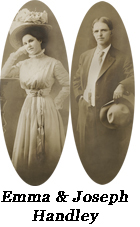
Rev. Owen J. Bennett Officiated and the Witnesses were Louis Cavill and May Marion. | Family: Joseph Samuel Handley / Emma Mary Cavill (F1)
|
| 3445 |
Richard John Cavil born March 02, 1894 he worked in Combined Locks Paper Mill. He had 2 kid's one son and one daughter. He fell of the top of the stack of wood and got a concussion and died four days later at home, died year 1927. | Cavil, Richard John (I3596)
|
| 3446 |
RICHARD ROSS MEMORIAL SCHOLARSHIP
Richard Ross was a man of many talents. His diverse skills led to many different areas of work, ranging from hospital orderly to teacher and administrator. He was born in Fairmont, Minn., in 1937. After high school graduation he enlisted in the Air Force and spent the next four years teaching electronics at Lowry Air Force Base in Denver, Colo.
In 1957 he married Beatrice Waterbrook. It was at this time that he began working at Porter Memorial Hospital in Denver as an orderly, later working in grounds, purchasing, and maintenance. While working at the hospital Richard attended classes at a local college.
In 1970 Richard and Bea moved to College Place, Wash. Richard continued his studies and finished an Associate of Arts degree in business at Walla Walla Community College. In 1974 he became director of plant services at Walla Walla General Hospital. This position evolved to include the departments of housekeeping, grounds, biomedical, fire and safety, and linens. Richard held this position until 1993 when he retired due to health problems. He died in 1995. Bea worked at WWU from 1989 until July 2002 when she retired as office manager for Campus Health Serivces.
Richard?s dream was to provide a scholarship for students who have to work their way through college and cannot spend the time needed to attain the best grades required for an academic scholarship.
?I will say of the Lord, He is my refuge and my fortress: my God; in Him will I trust? ?Psalm 91:2 | Ross, Richard Arles (I3293)
|
| 3447 |
Robert Nelson Cavill was a patrolman in the Detroit Police Department | Cavill, Patrolman Robert Nelson (I266)
|
| 3448 |
Robert Paul (Bob) Moore of State College died Friday evening,
June 18, 1999, at Clare Bridge Alternative Living Home in State
College. He was born Oct. 13, 1926, on Mountain Road, Port Matilda, a son of
Esther Cowher Moore of rural Port Matilda and the late Frederick
Austin Moore. He was married to Josephine Rumberger on Oct. 8, 1950,
by the late Rev. Paul Myers at the Warriors Mark United Methodist Church.
He graduated from Port Matilda High School in 1945. He
completed an apprenticeship in printing through the Interna-tional
Typographical Union.
He took courses in insurance at Penn State.
In the printing trade, he work-ed at the former Nittany
Printing and Publishing Co., Himes Printing, and he owned and operated the
Robert P. Moore Printing Shop, all of State College. He was also
affiliated with the Conemaugh Valley Mutual Insurance Co. of Johnstown.
He coached Little League baseball in State College for 10
years. He served in the U.S. Navy, Pacific Theatre (Pearl Harbor),
from 1944 to 1946. He was a member and Past Master of State College Lodge 700,
Free and Accepted Masons; Valley of Altoona Scottish Rite, Past Thrice
Potent Master, Lodge of Perfection.
In July 1994, he was the recipient of the Meritorius Service
Award from the Council of Deliberations. He was a member of Jaffa Temple,
AAONMS; Past High Priest, Bellefonte Royal Arch Chapter; Nittany Council;
Past Commander, Constans Commandry Knights Templar; Red Cross of
Constantine; Seven Mountain Council Allied Masonic Degree;
Williamsport Conclave York Rite College; Centre Forest Tall Ce-dars of
Lebanon; Life Member Knights Templar Eye Foundation; Centre County Hi-noon
Club; State College Order of the Eastern Star; United Commercial
Travelers; Mountaineers Investment Club; Veterans of Foreign Wars Post
4550, Tyrone; State College Elks 1600; and Halfmoon Grange 290.
He was an avid hunter, having spent 32 days in Alaska. He also
hunted in Idaho, Oregon and Montana. He fished at Biscotasing, Ontario,
Canada.
In addition to his wife, he is survived by a sister, Rosalie
Fasick of State College; and four brothers, James Dean of Tyrone, Alvin of
State College and Oregon, and Oscar and George, both of rural Port Matilda.
Preceding him in death was a sister, Almeda (Dolly) Schenck; and two
brothers, Jacob and Douglas Moore.
Memorial services will be held at Mount Nittany United
Methodist Church, 1500 E. Branch Road, State College, on Saturday, June 26,
1999, at 11 a.m. with the Rev. Carl E. Hill officiating.
A Masonic Service will be held at the conclusion of the
service. Friends will be received after the service.
Burial will be in Spring Mount Church of the Brethren
Cemetery in Spring Mount.
| Moore, Robert Paul (I1954)
|
| 3449 |
Ruth Ann Hager
Cascade Hills Transcription, Inc.
8095 Darling Street SE
Salem, OR 97317
(503) 371-8858
(503) 585-4228 (fax)
Email: [email protected] | Meyer, Ruth Anne (I284)
|
| 3450 |
Saint Anne's Church - Rev. Fr. Joseph E. Guertin | Family: Robert Hugh Cavill / Lorraine Verna Condory (F418)
|
|
|
|